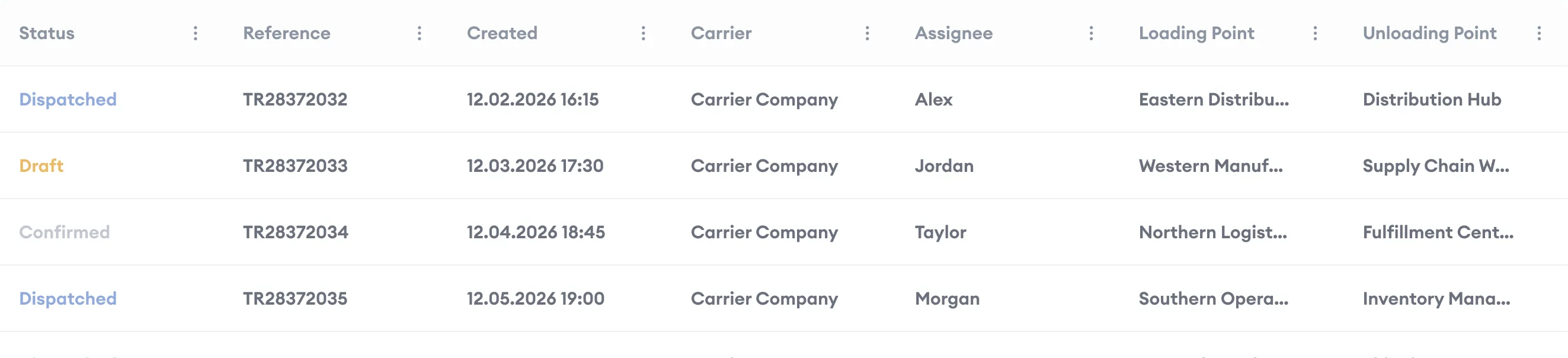
Cloud-based TMS that centralizes orders, carrier assignment, tracking, and documents
For shippers without an in-house IT team or dedicated TMS.
Your simplified transport workflow
Documents & POD
Keep CMR/POD and shipment docs linked and searchable per shipment.
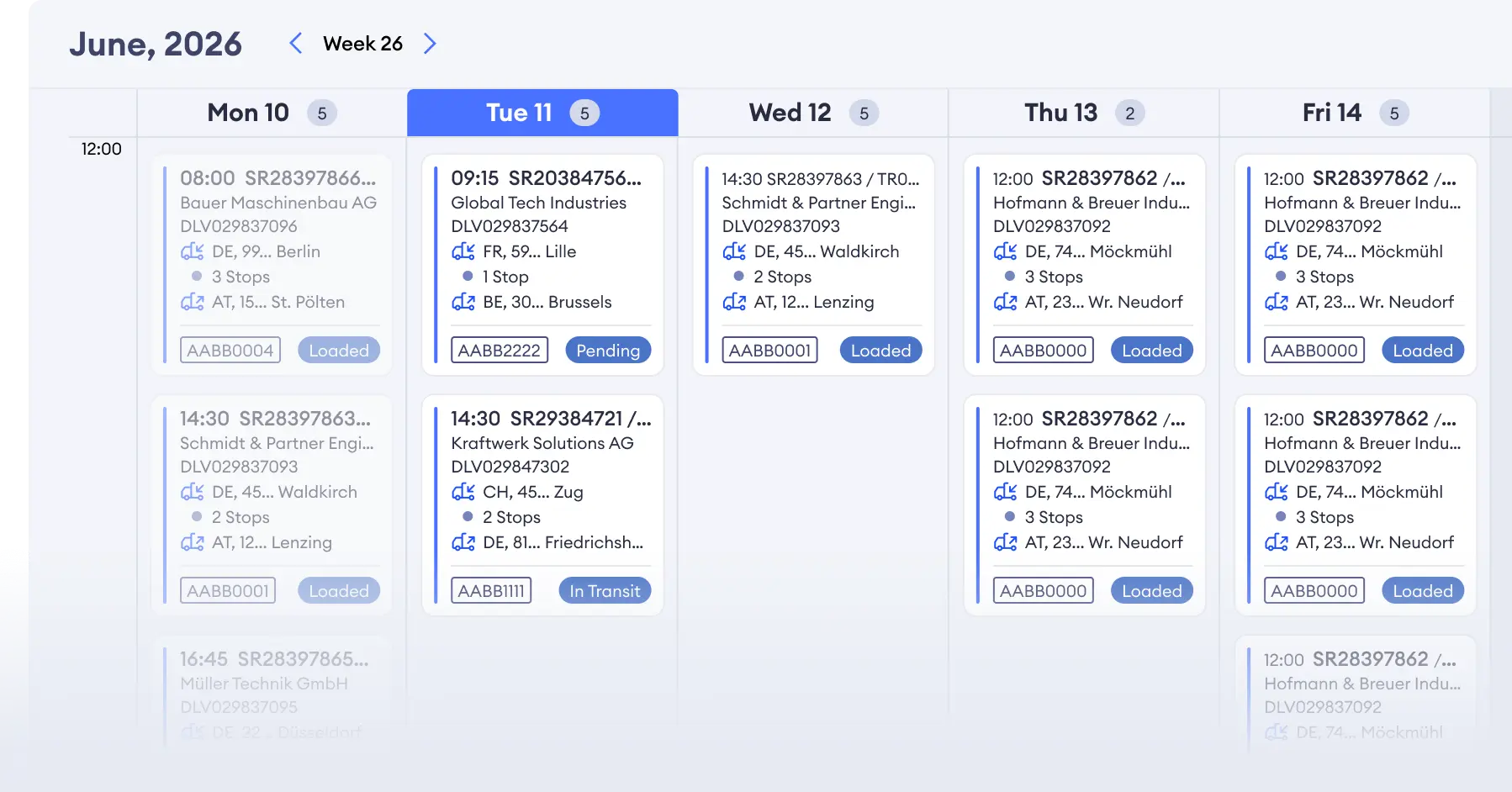
Loading calendar / Slots
Plan loading times and reduce last-minute coordination.
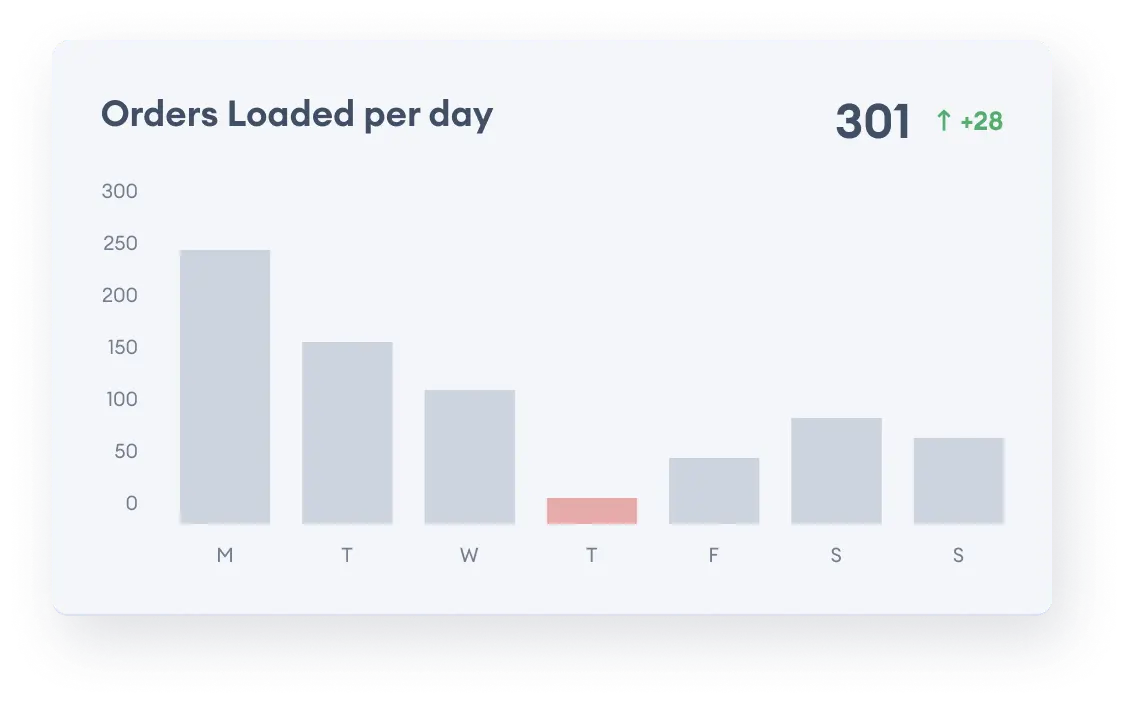
Reporting & KPIs
Lane volumes, carrier performance, service levels.
Order & Shipment Management
Centralize orders and convert them into shipments with clear statuses.
Carrier Pool & Assignment
Manage trusted carriers, send transport orders, collect confirmations.
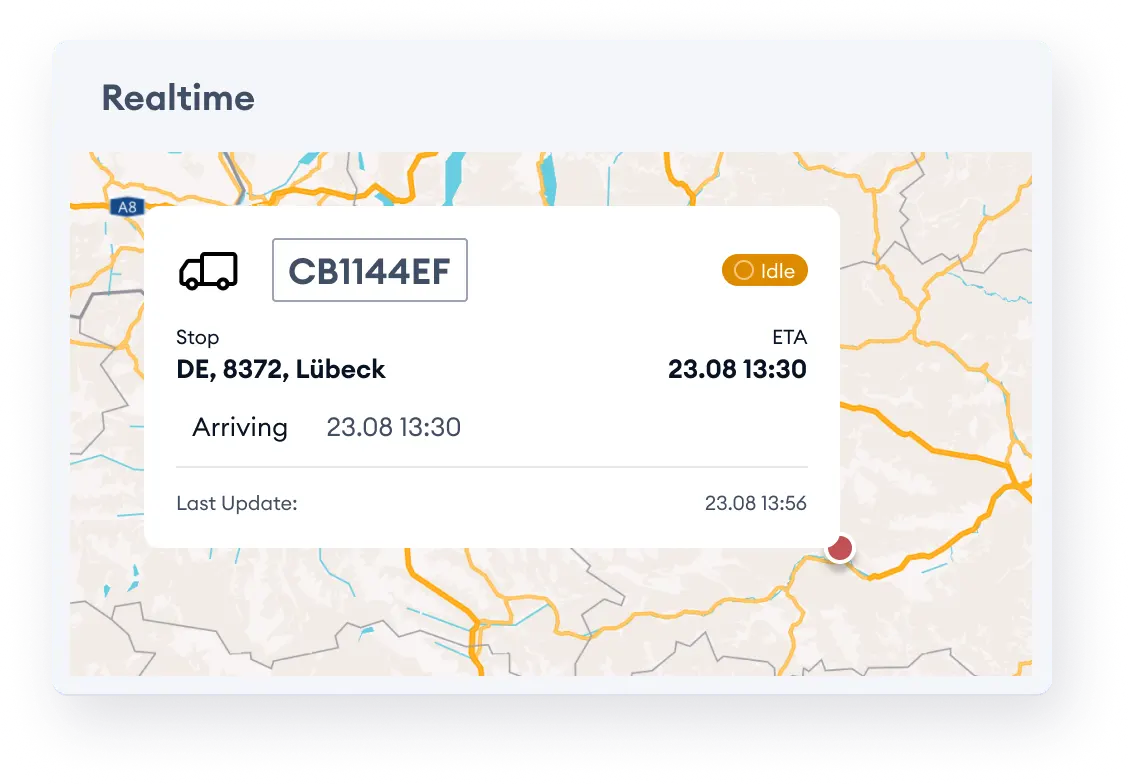
ETA / Milestone Visibility
Track what’s confirmed, in transit, delivered — flag exceptions early.
Data import & Integrations
Start simple (manual entry or CSV) and integrate later via API when it makes sense, no need for a heavy IT project to begin.
Team Roles & Access
Role-based access for logistics, warehouse, customer service.
A Smarter Way to organise your shipments
Keep every tender, confirmation, status update, and document attached to the shipment from order to POD
Today
Shippers lose time chasing confirmations, tracking updates, and PODs across email, Excel, and carrier portals. Sales and customer service still ask “where is it?” and answers are hard to find.
Create or import orders, assign carriers, track milestones/ETAs, and keep all documents linked per shipment, one source of truth for logistics.

FAQ
What documents can we manage?
Shipment-related documents (e.g., CMR/POD, packing lists, and other attachments) can be stored and linked per shipment for a clean audit trail.
Can we manage multiple sites and users?
Yes. You can have multiple users and sites/locations with shared visibility and role-based access.
How fast can we go live?
Typically in phases: start with one team/lane, validate the process, then expand.
Is Seamlog an ERP replacement?
No. Seamlog complements your ERP by focusing on transport execution: shipments, carrier collaboration, visibility, and documents.
Can we run a pilot first?
Yes, a small pilot is the recommended starting point (e.g., 1 lane/site, 2–3 carriers, a few weeks), with clear success metrics.